The Demo Before the Demo: Test a Song Direction While the Idea Is Still Fresh
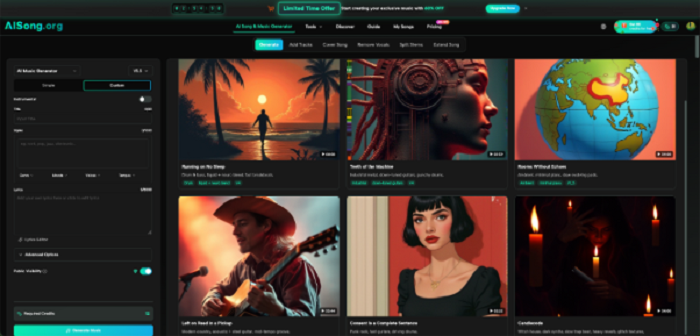
A songwriter can hear a chorus clearly on the walk home, record a rough voice note, and lose the feeling by the next morning. The words remain, but the imagined tempo and arrangement become harder to explain. AI Song can be useful as a sketching tool: the writer describes a direction or enters lyrics, then listens to how the idea behaves as a fuller song before committing to a final production route.
A Song Sketch Should Answer Questions
A useful demo should help the artist decide what the song wants to become.
Does the chorus need more lift? Does the lyric feel intimate or theatrical? Would the idea work better as restrained indie pop, acoustic folk, electronic dance music, or something else? Is the vocal phrasing too crowded? Does the second verse repeat the emotional work of the first?
Placed inside rhythm and arrangement, the words reveal whether the concept has contrast, a line is hard to sing, or the mood supports the story.
Treat the generated track as evidence, not a command.
Choose the Part of the Idea You Are Testing
Before generating, identify the main uncertainty.
When testing lyric structure, keep musical instructions simple. When testing genre, keep the lyrics unchanged. To test whether vocals belong, compare vocal and instrumental directions built around the same mood.
Write the question at the top of your notes: “Does this chorus feel more honest as a slow ballad or mid-tempo pop song?”
Prepare Lyrics That a Musical Draft Can Use
A page of lyrics is not always a singable structure. Before entering text into this AI Music Generator, make the sections easy to understand. AISong currently supports text or lyrics as input and provides separate controls for styles, genre, moods, voices, tempos, and instrumental output.
1. Label the song sections
Use clear labels such as Verse 1, Pre-Chorus, Chorus, Verse 2, Bridge, and Outro.
A simple structure might be:
-
Verse 1: introduce the scene
-
Pre-Chorus: add tension
-
Chorus: state the main emotional idea
-
Verse 2: reveal new information
-
Bridge: change the perspective
-
Final Chorus: return with greater meaning
Do not add sections merely because songs “should” have them.
2. Read every line aloud
Read every line at a steady pace. Mark crowded syllables and misplaced natural emphasis.
For example, “I kept every little promise that you never asked me for” carries more rhythmic weight than “I kept the promises you never asked for.”
3. Give the chorus a distinct job
The chorus may reveal the central statement, simplify the story, or offer the phrase listeners remember.
When testing a generated version, notice whether the chorus feels like an arrival. If it does not, the issue may be the arrangement, but it may also be the writing. Change one of those elements at a time.
4. Leave room for musical phrasing
Music needs space, although silence can look unfinished on the page. Shorter lines can allow a melody to breathe, repeat a phrase, or create anticipation.
If a generation sounds rushed, do not immediately blame the tool. Try removing one explanatory line and listen again.
Compare Directions Without Losing the Original Song
Style testing becomes useful when the comparisons are controlled. Keep the lyric and basic emotional goal fixed. Change one major choice, such as tempo, genre, or vocal character. Used this way, the AI Song Maker can help you hear how a single creative change affects the same underlying song rather than sending you toward a completely different idea each time.
Suppose the song is about returning to a childhood neighborhood. One version could use warm acoustic folk at a relaxed pace. Another could use restrained electronic pop with a steady pulse. A third could be piano-led and slower. The question is not which genre is “best.” The question is which arrangement reveals the lyric most clearly.
Keep notes after each version:
|
Version |
What changed |
What became clearer |
What felt wrong |
|
A |
Acoustic folk |
Story felt personal |
Chorus lacked lift |
|
B |
Electronic pop |
Hook felt memorable |
Verse felt emotionally distant |
|
C |
Piano ballad |
Key lines landed clearly |
Overall pace felt too slow |
These notes prevent a vague search for something “better” and help later collaborators.

Listen for the Song, Not the Surface Finish
During the first listen, ignore small production details and focus on structure.
Where does your attention drop? Which lyric feels unnecessary? Does the title line arrive at the right moment? Is the bridge changing the meaning, or only changing the chords? Can you remember the chorus after the track ends?
During the second listen, focus on arrangement. Notice when instruments enter, where the energy rises, and whether the vocal has enough space. Identify useful behavior rather than copying details.
During the third listen, return to the original voice note or lyric page. Ask whether the generation preserved the reason you cared about the idea. If the answer is no, write down what disappeared.
Share a Direction More Clearly With Collaborators
“Make it emotional” is difficult feedback. A generated sketch can make the conversation more specific when accompanied by notes.
You might say: “The restrained opening in this draft is right, but the chorus should feel less glossy. Keep the steady tempo and leave more space after the title line.” That gives a collaborator something actionable while making clear that the draft is a reference, not a finished blueprint.
Separate the elements you want to keep from those you do not. Tempo, section length, density, and emotional progression are often more useful than asking someone to reproduce an entire generated arrangement.
When sharing the sketch, include the lyric version and the prompt that produced it.
Archive the Experiment, Not Just the Favorite
Keep the rejected versions long enough to understand the decision. Give each file a simple name, save the prompt beside it, and add one sentence about the result. A note such as “strong chorus, but verses feel too bright” will be useful weeks later.
Also preserve the original lyric before editing it to fit one generation. Otherwise, a temporary arrangement may quietly reshape the writing. Your archive should show the starting idea, the tested directions, and the choice you made after listening.
Know When to Stop Generating
Set a small limit before you begin. Three controlled directions can answer a clear question. Twenty unrelated results may weaken your connection to the song.
Stop when you can state the next move. Perhaps the lyric needs a shorter second verse. Perhaps the mid-tempo version supports the chorus. Perhaps none of the arrangements match the quiet tension in the original voice note.
That result still shows the prompt has not captured the idea. Return to the note and describe the missing quality more precisely.
Keep the Human Decisions in the Center
A song carries choices that cannot be reduced to genre labels. The reason a line repeats, the breath before a title phrase, or the discomfort in an unresolved ending may be the whole point.
Use generation to expose options, not to erase those choices. Keep your original notes, dates, and voice recordings. Revise lyrics intentionally. When a generated detail inspires you, write down why it works so the idea becomes part of your own decision-making process.
Conclusion
An early song demo should reduce uncertainty. Decide what you are testing, prepare lyrics that can be sung, compare only a few controlled directions, and listen for structure before surface polish. Keep notes that explain what each version taught you, then carry those decisions into the next writing or production session. Choose one unfinished chorus today and test a single question instead of chasing a finished record.